
Therapy for the parts of motherhood that are hard to say out loud
I am Dr. Elena Vance, a licensed psychologist in California. I work with mothers and women in Pasadena, and online across California, on anxiety, postpartum change and the strain of carrying work and family at the same time. Sessions are fifty minutes and $180, and the fifteen-minute consultation before you book is free.
A psychologist who works the way a real conversation goes
I am Elena. I trained as a clinical psychologist and have spent most of my practice with mothers in the first years after a baby, and with women who look composed in public and are barely holding the week together. Sessions are conversational. I ask direct questions, I do not fill silences for you, and I will say plainly if what you are describing is outside what I treat.
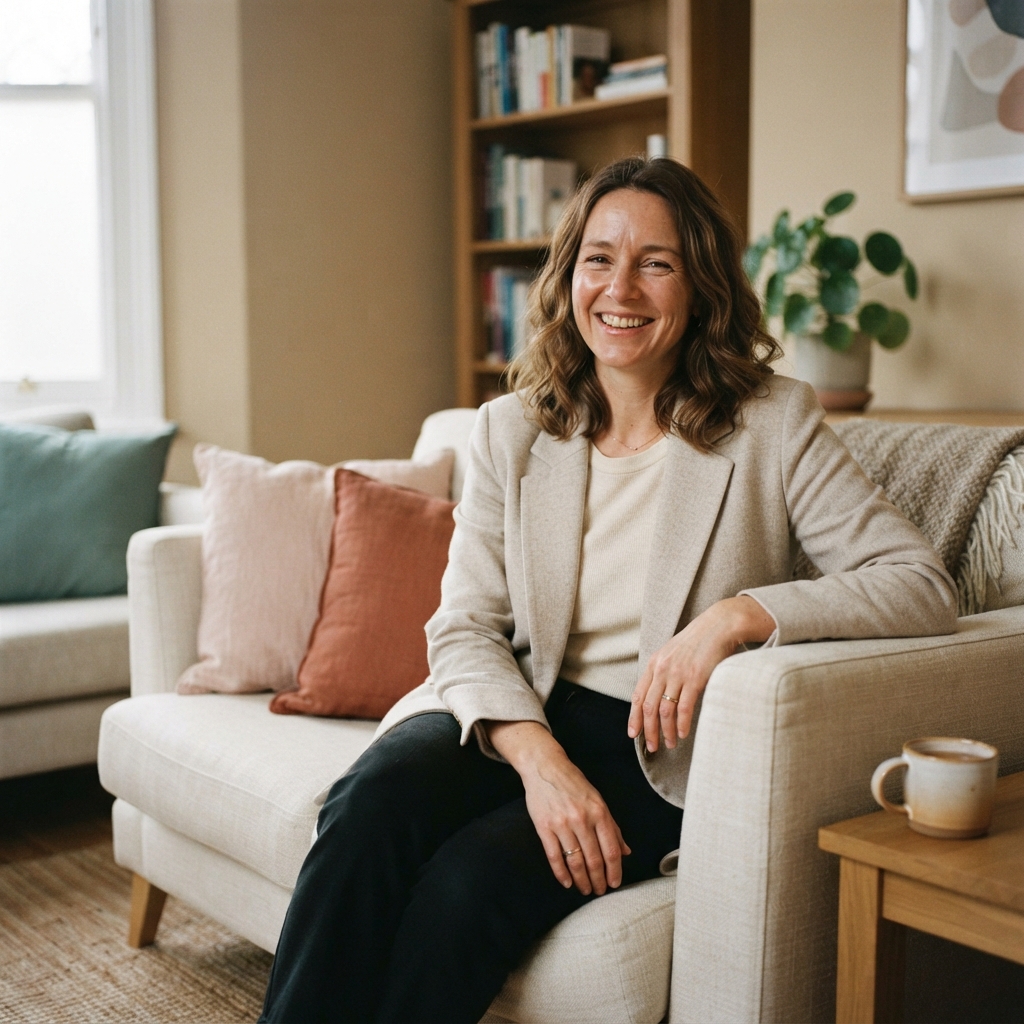
Four approaches, chosen to fit you rather than the other way round
No single method suits everyone. The first few sessions are partly about finding what fits how you actually think and live, and we adjust as we go.

Cognitive behavioural therapy
We look at the link between a thought, the feeling it brings and what you do next, then test small changes that hold up in your actual week.

Acceptance and commitment therapy
Less arguing with the thought and more room around it, with your energy pointed at what you want to spend it on.

Mindfulness-based work
Short, practical attention exercises you can use in a car park or at 3am, rather than long meditations that need a quiet hour.

Strengths-based work
Naming what already works for you, because most people arrive with more skill than they can see in themselves.
Training and credentials
Dr. Vance is licensed as a psychologist in California. These are the credentials that matter if you are checking whether the practice fits, asking for a referral, or submitting a superbill to your insurance plan.

Doctorate in clinical psychology
PhD in Clinical Psychology, with doctoral training in adult assessment and evidence-based treatment for anxiety and mood difficulties.

California licence
Licensed Psychologist in the State of California, licence PSY 00000. Licence details can be confirmed with the California Board of Psychology.

Perinatal mental health training
Postgraduate training in perinatal mood and anxiety disorders, with a focus on the first year after birth.

Continuing education
Ongoing professional development in anxiety, perinatal care and trauma-informed practice.
What a session actually looks like
A first session is mostly talking. I ask what brought you in, what you have already tried, and what would count as better in a few months.
You set the pace
You decide how fast we go and what you are ready to say. Nothing has to be disclosed before you choose to say it.
Work between sessions
Sometimes a small experiment for the week, sometimes nothing. You will not be given homework you cannot fit into a real week.
Checking in on progress
Every six weeks or so we stop and ask whether this is still the right direction, and change it if it is not.
Not sure whether this is the right fit?
The consultation exists for exactly that question. You can ask about availability, fees and how I work, then decide afterwards with no obligation either way.